Learning with purpose.
Al-Furqan School aims to be a leading institution in Islamic education, recognized for excellence in Quranic studies and Muslim character development. We create a supportive and enriching learning environment that encourages a lifelong commitment to learning, memorizing, and living with the Qur’an.
We empower students to become exemplary Muslims who contribute positively to society, demonstrating integrity, compassion, justice, and equality.
Our vision & mission
We envision a vibrant community of learners deeply rooted in Islamic teachings and principles. We empower students to embody Islamic values and contribute to the spiritual, intellectual, and social well-being of our community and beyond.
Our mission is to provide a comprehensive Islamic education that instills a deep understanding and appreciation of Islam and the Qur’an. In an engaging learning environment, students develop a connection to their faith and a strong sense of Islamic identity. Through a rigorous academic curriculum enriched with Islamic studies and values-based education, students gain knowledge, skills, and moral integrity to lead lives guided by Islamic principles, inshaAllah.
The school day.
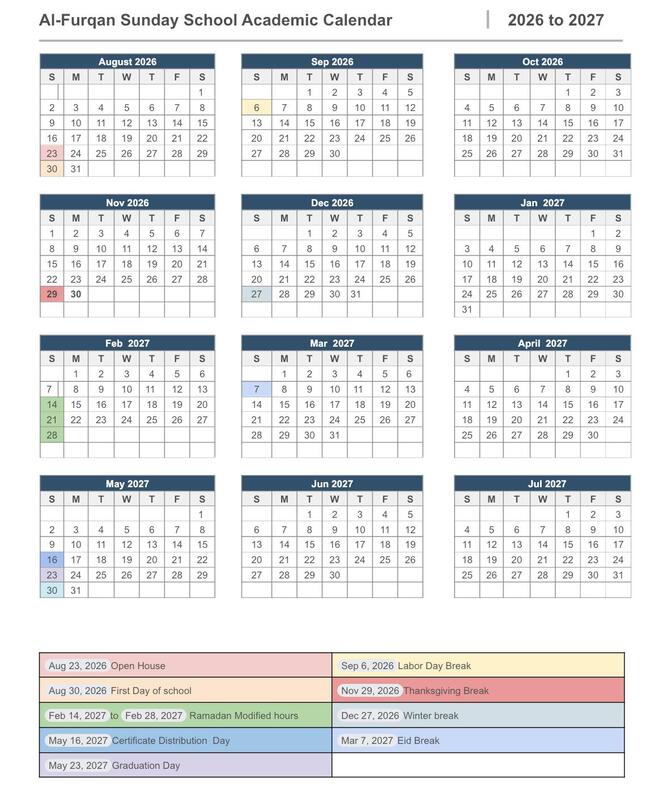
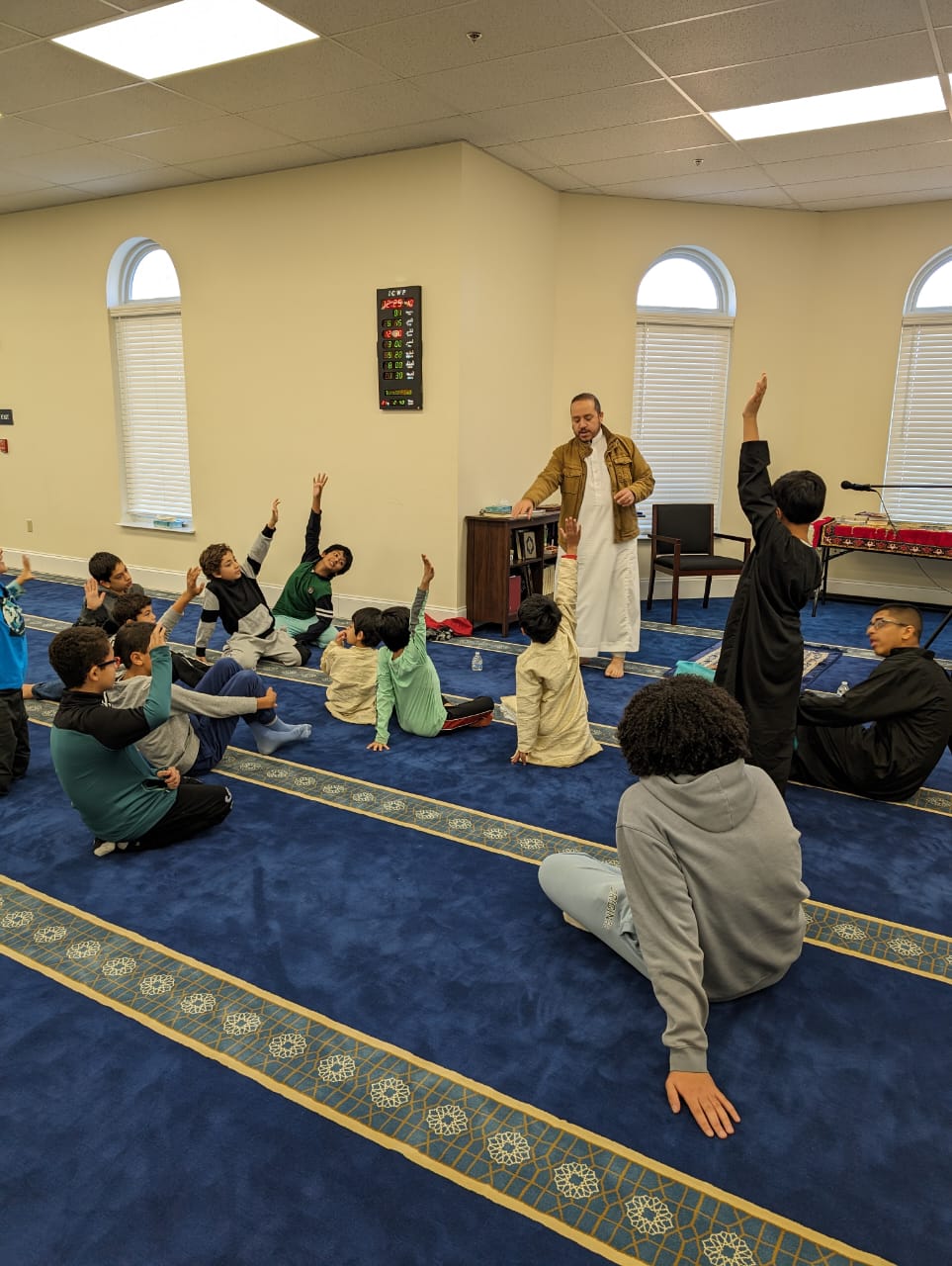
Classes begin at 11:00 AM and end at 3:00 PM every Sunday. Drop-off is 10:45–11:00 AM; parents or guardians must bring students inside the building. Pickup is 3:00–3:15 PM, by parents or authorized individuals. The school is not responsible for supervising children after 3:15 PM.
Qur’an memorizationRecitation, repetition, and steady progress through the Qur’an.
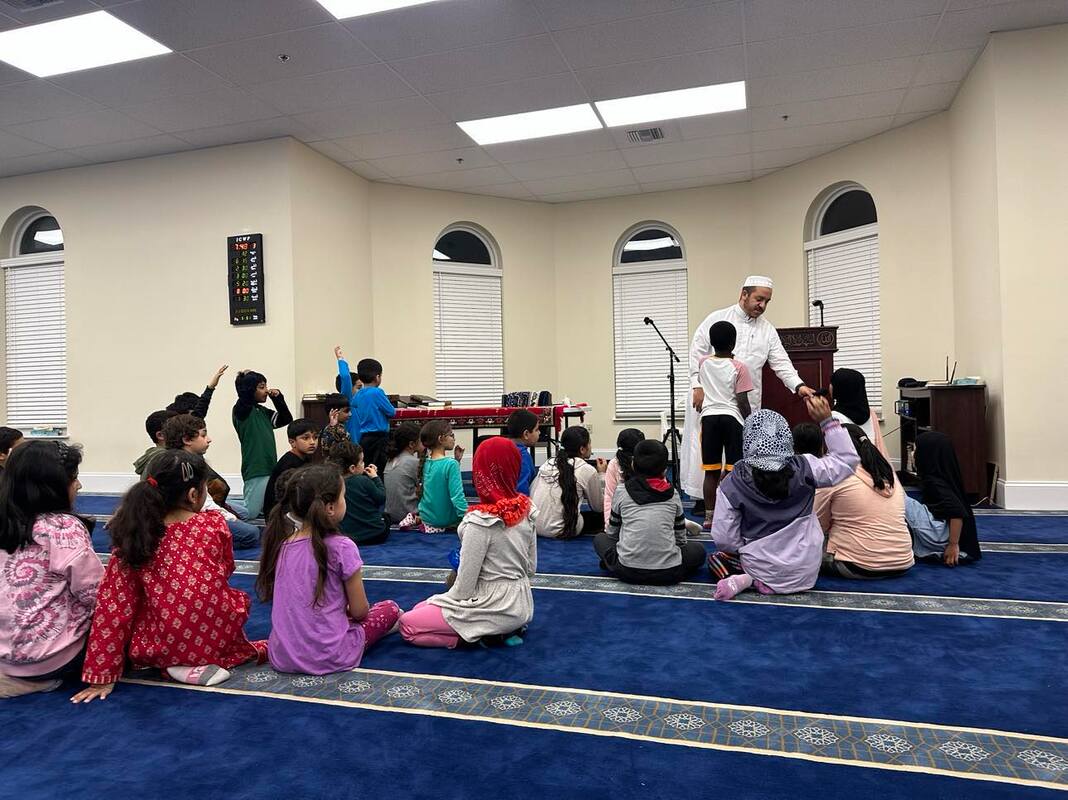
Qur'an Memorization In Qur'an Memorization class, we evaluate students based on their memorization level. Beginner students will start from the Surah Al-Fatiha, An-Nas, Al-Falaq, Al-Ikhlas, Al-Masad...etc. The method we use to help the students memorize the Qur'an is called Talqin . The Talqin method has been widely used in many Tahfidz Houses and Islamic Schools for Qur'an memorization. It is a very effective method for improving the quality of reading and memorizing the Qur'an. The word "talqin" comes from Arabic, meaning to set an example to be followed. A person who performs talqin is called a "mulaqqin," while the one who follows is called a "mulaqqan." In teaching the Qur'an, talqin involves a skilled Qur'an teacher reciting the text, while students listen and then repeat it. In practice, the teacher recites short, simple sentences from the Qur’an which the students imitate repeatedly until they are fluent. The Talqin method is used not only to improve reading quality but also as a key method for memorizing the Qur'an. Once the students complete Juz Amma, they will continue to Juz Tabarak, etc.
Qur’an readingArabic letters, Qaida Nooraniya, pronunciation, and tajweed.
Qur'an Reading In our Qur'an reading class, students will complete the Qaida Nooraniya curriculum, enabling them to start reading from the Mushaf earlier. Students will learn Arabic letters – recognition of the shapes, and their proper Makhaarij i.e. correct pronunciation , identify, recognize, and write the Arabic alphabet. Upon completing the Nooraniya, students will be taught in addition Arabic vocabulary and numbers and will learn to understand some grammar and applications. By the end of the course, students should be able to read Qur’ān with correct pronunciation using the rules of tajweed inshaAllah. Noorani Qaida i s a simple way of teaching the Holy Quran and the Arabic language. Noorani Qaida is a basic textbook used to teach the rules of the Arabic script and the proper way of reciting the Quran to beginners, especially children. The book of Noorani Qaida has 17 chapters teaching the Arabic alphabet, and Arabic words, then reading complete verses from the Quran, in addition to learning the Tajweed rules. It is a comprehensive book that covers the basic principles of Quranic script, phonetics, and grammar, and is designed to help students learn to read the Quran correctly and fluently. Islamic Studies and Young Muslim Leader Program (YMLP)
Islamic Studies & young leadersFaith, character, and learning alongside students of a similar age.
Islamic Studies and Young Muslim Leader Program (YMLP) is one of three subjects we teach in our Sunday School. In this class, we assign the students their classes based on their age and grade level in public school so they will feel comfortable learning the material with classmates in their age group. With the Islamic Studies and YMLP program, we strive to nurture our youth students' spiritual, moral, and intellectual growth, guiding them to become knowledgeable, pious, and compassionate individuals who uphold the values of Islam in all aspects of their lives bi-iznillah.